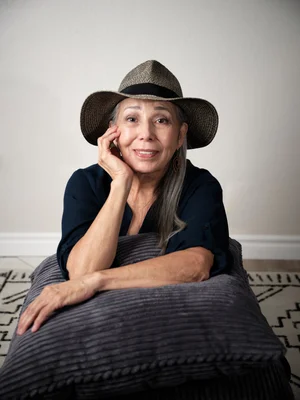
A Monastic Practice
A monastic practice is often associated with rigid discipline, but I think of it more as a form of listening.
For me, it does not mean withdrawing from life. It means becoming more careful about what I allow to enter. My studio, my mind, my body, my attention — these are not separate rooms. What comes into one eventually finds its way into the others.
So I curate.
Not just the objects in my space, but the noise. The habits I invite in without thinking that scatter me before I have even begun. The phone, the scroll, the small interruptions that fracture attention. It is not easy to step away from that pull. The world is very skilled at entering the room.
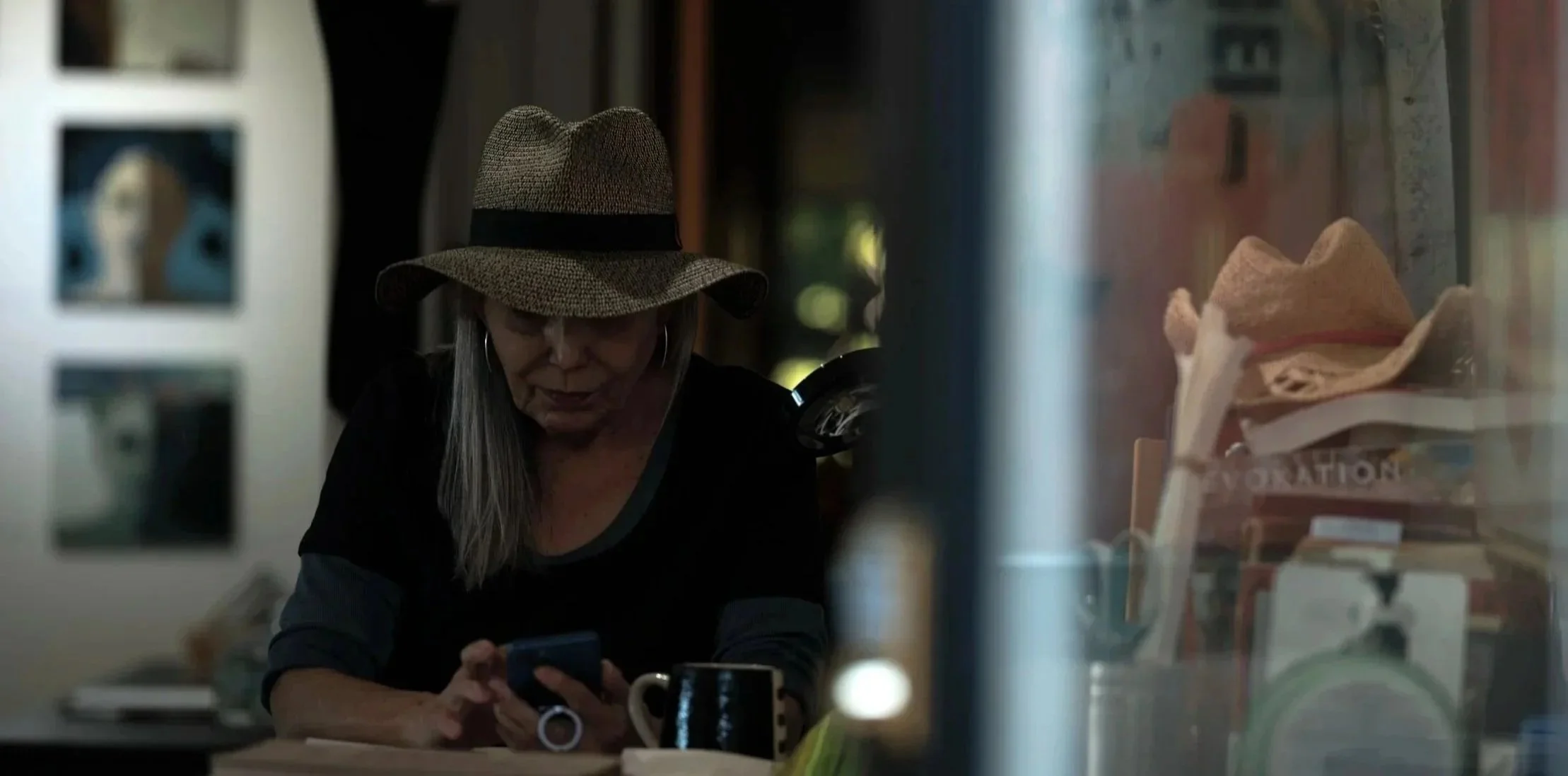
An art practice requires a different kind of energy.
Something stayed with me years ago after reading The Cloister Walk by Kathleen Norris — the devotion to ritual.
Not long after, I discovered a monastery nearby and participated in one of their silent retreats. The quiet, the structure, the chance to be in silence — it was a wonderful experience. I did not know then what it was preparing in me, but it planted a seed.
Or maybe it was one of those moments when life quietly points you toward something long before you know how to recognize it.
When I think about the rituals of monastic life — the bell, the body rising, prayers, the same work returned to again and again — there is something in that repetition that interests me as a painter. Not the severity of it, but the devotion.
Maybe that early experience of silence and inward attention is part of why I later gravitated toward a daily practice of yoga, meditation, and journaling. They became ways of returning to myself — to the truer self beneath the static, the one who can listen, the one who can paint.
That daily practice is powerful. It sets a tone for the day. It helps me enter myself before I enter the studio.
But it does not mean the studio automatically falls in line.
The studio has its own mood, its own resistance, its own personality. There are days when painting does not come with clarity or ease. The room feels stagnant and quiet, as if something has settled too heavily.
That is where another kind of ritual begins.
Not the inward ritual that brings me back to myself, but the studio ritual that helps me tune in to the room, the materials, and the work waiting there.
Ritual gives me a structure.
On days that feel like obligation, ritual becomes a practical way of entering the studio.
I begin with what is near.
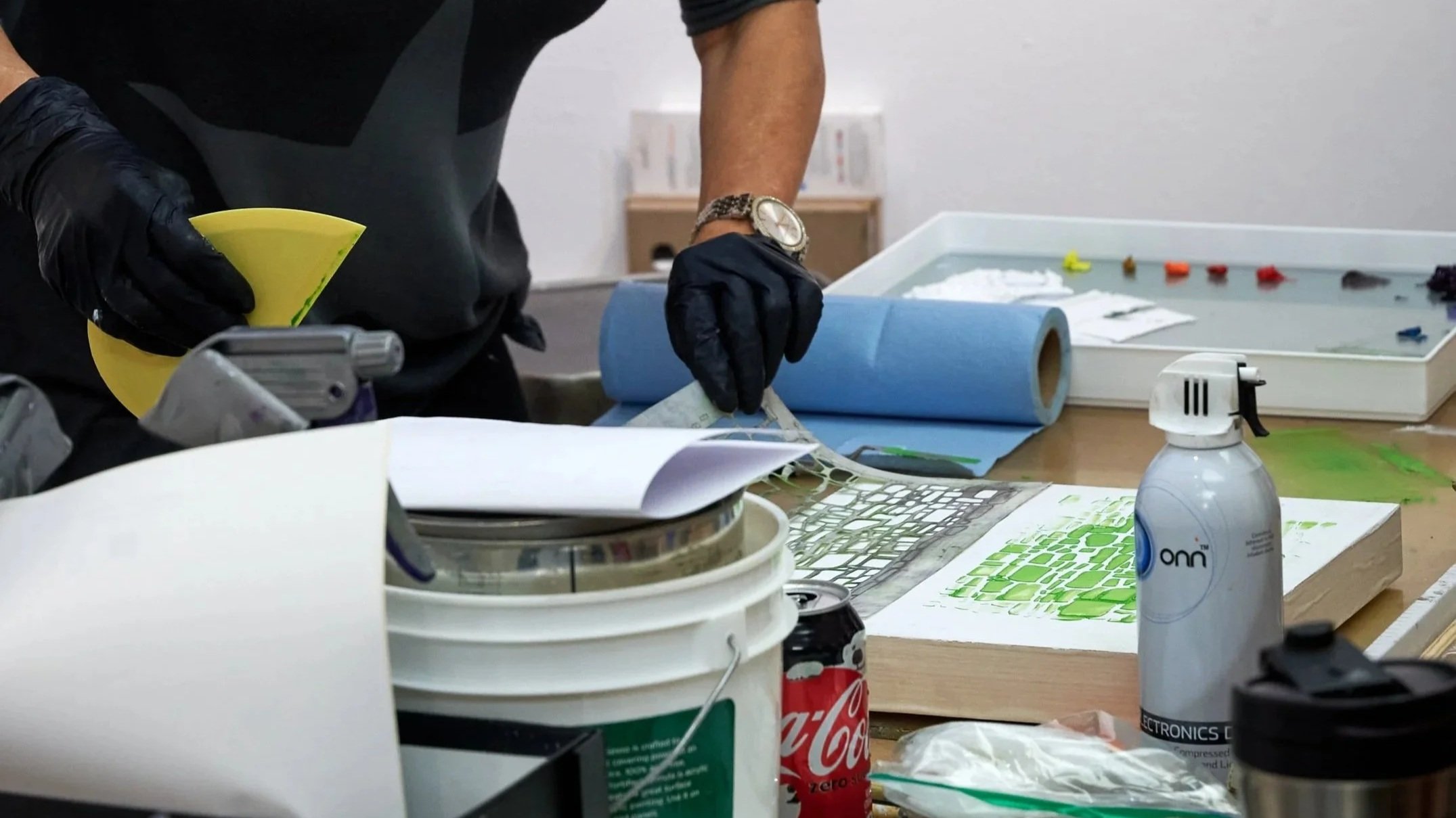
A table.
A broom.
A pile of paper.
A wall of unfinished work.
I straighten materials. I put on music or binaural sounds. I pull out collage papers. I open books that return me to artists, poets, the body, and the questions beneath the work.
These small acts do not make the painting happen.
They make me available.
Available to notice when something needs to shift.
Because sometimes ritual does not mean doing the same thing again. Sometimes it means changing the conditions — a different sound, a different surface, a shift in where I stand, a material I have not reached for in a while.
Change wakes something up.
It interrupts the automatic gesture. It lets the work be approached from another door.
I have noticed that change is not the opposite of ritual.
It can be part of the ritual.
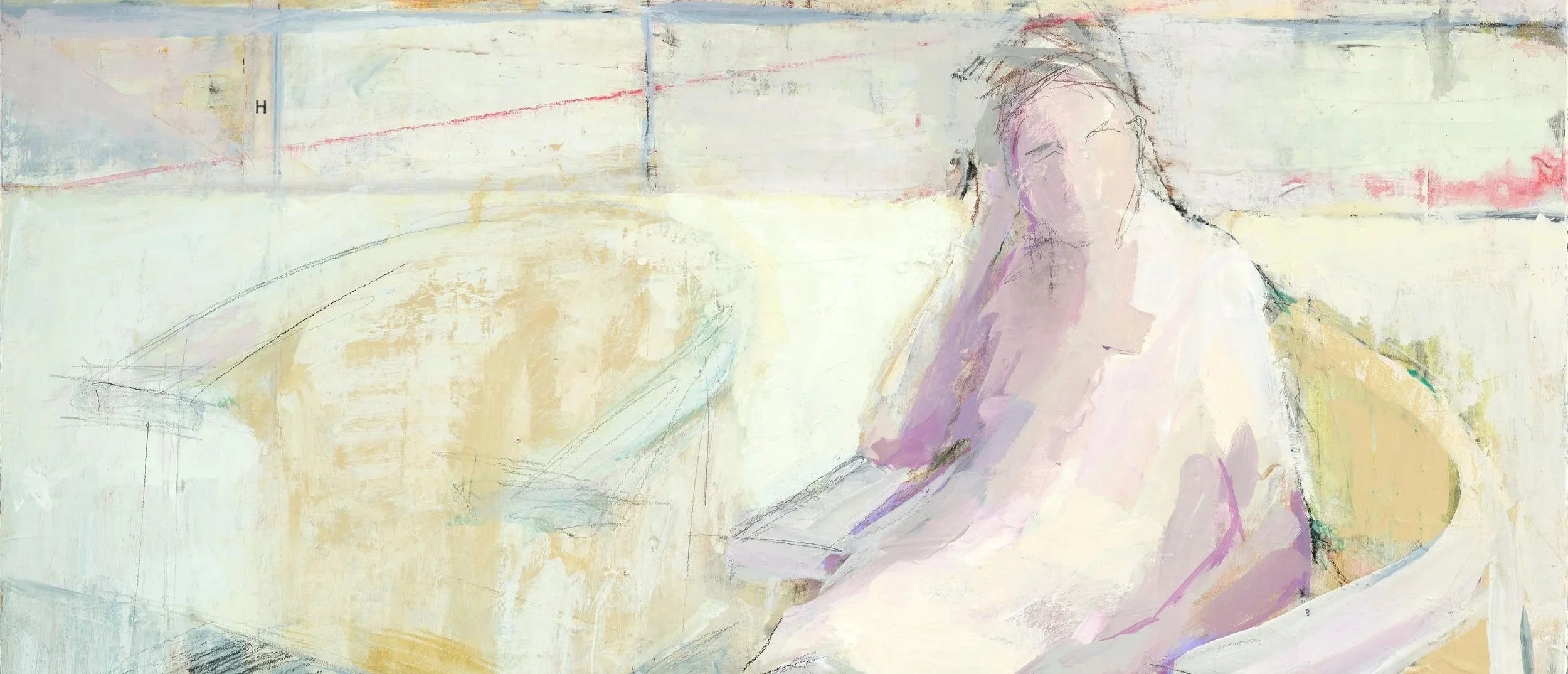
Detail - Where it Begins, 30x30 inches
What I am learning
Ritual is not about keeping everything the same. It is about becoming available enough to notice what needs to shift, and when.
Quiet — to hear.
Ordered — to begin.
Open — to change.
The challenge for me is to stay available.