When Doubt Grows in Silence
I was listening to “The Sound of Silence” by Simon & Garfunkel, and the opening—“Hello darkness, my old friend”—made me think about doubt in the studio.
Oh yes! An old friend, all right.

Doubt knows the studio. It knows the artist. It knows our weaknesses and is never shy about pointing them out.
It usually begins with the work. What is amiss? Have I gone too far? Have I lost the freshness?
A painting is never just a painting by that point. It holds hours, days, sometimes weeks of attention. There is the cost of the canvas and materials, along with years of practice and education.
Gradually, the work becomes precious, and every contemplation begins with:
What if?
What if I ruin the part that is working?
What if I cannot recover what I lose?
What if?
And the beat goes on.
Then doubt does something more dangerous. It leaps off the canvas and attaches itself to the artist.
One moment the question is, What is amiss in the painting?
The next, it is a question of judgment, ability, and perhaps the whole call to be an artist.
Later in the same song, Simon & Garfunkel warn that “silence like a cancer grows.”
Studio doubt can behave that way. Left alone and unspoken, it expands until a difficult painting begins to feel like evidence against an entire life.
When that happens, return to the surface.
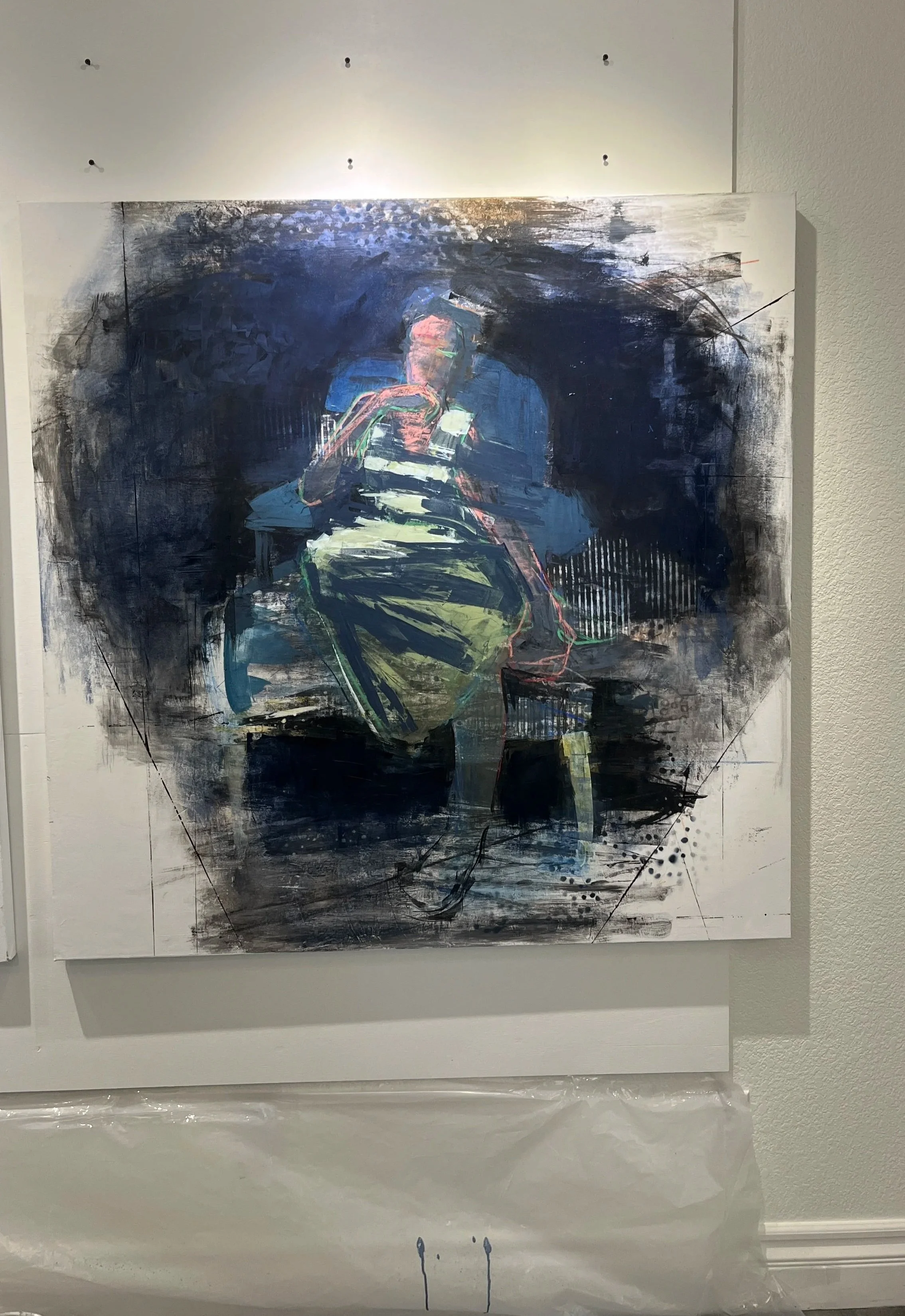
What is actually there?
What is the dominant color?
Where is the strongest value, and how does the eye travel through the work?
What is still alive?
The questions continue, but now they concern the painting rather than accuse the artist.
Sometimes the artist has simply been alone with the work too long. Every layer, revision, hesitation, and hard-won passage is known. The painting can no longer be seen apart from its biography.
That is when another person can help.
A friend. Another artist. A mentor.
Someone who does not know the painting’s biography.
They see the surface and respond to what is present—not to the time invested, the expensive materials underneath, or the private drama of how the painting arrived there.
That distance can be clarifying.
A thoughtful conversation may not solve the painting. It may simply break the silence and help separate what the work is asking from what fear is saying.
A difficult painting is not a failed life.
Sometimes it is simply a challenging painting.